Made once.
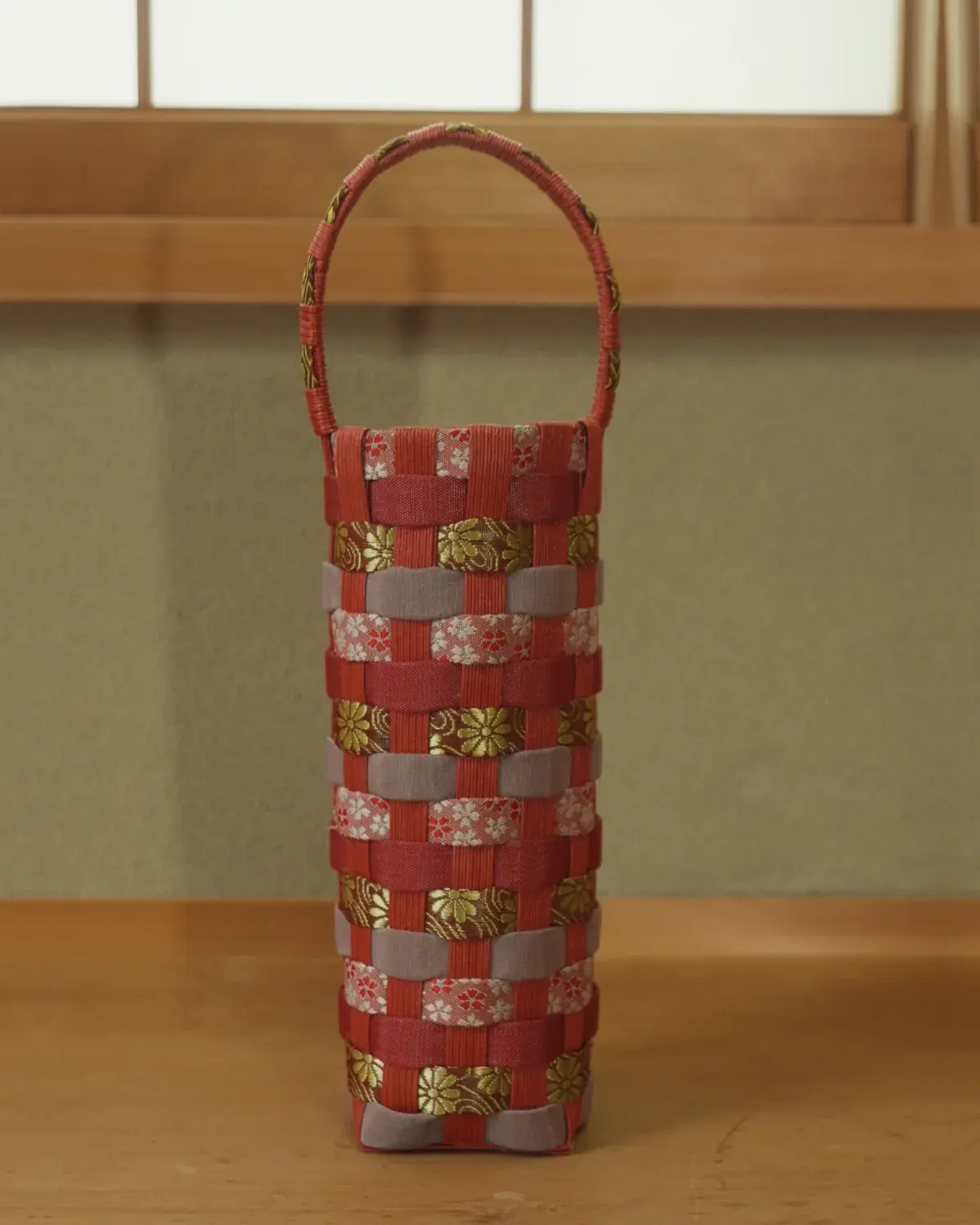
Tatami-beri pieces, made by hand at Honmyoji in Fuji.
View the collection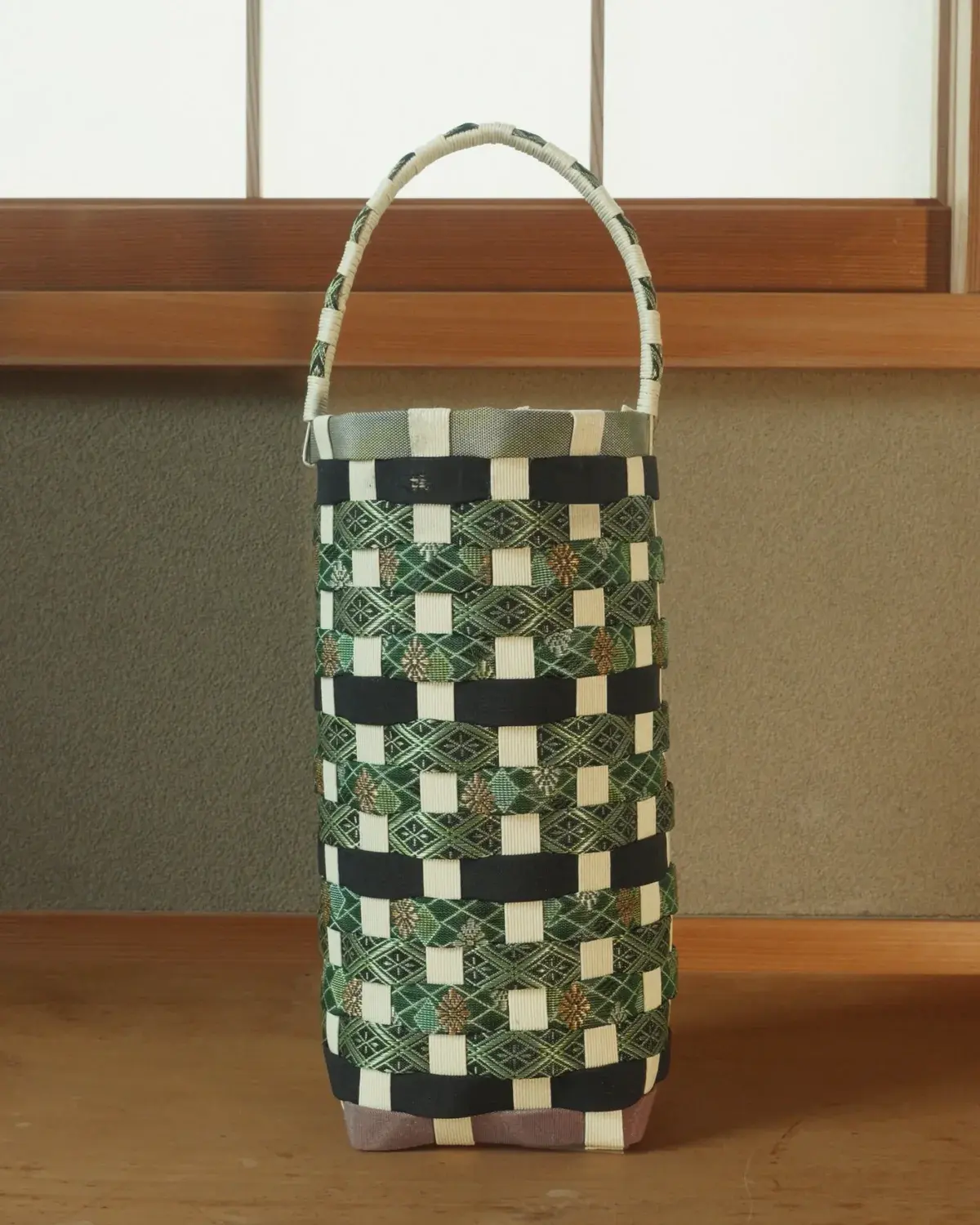
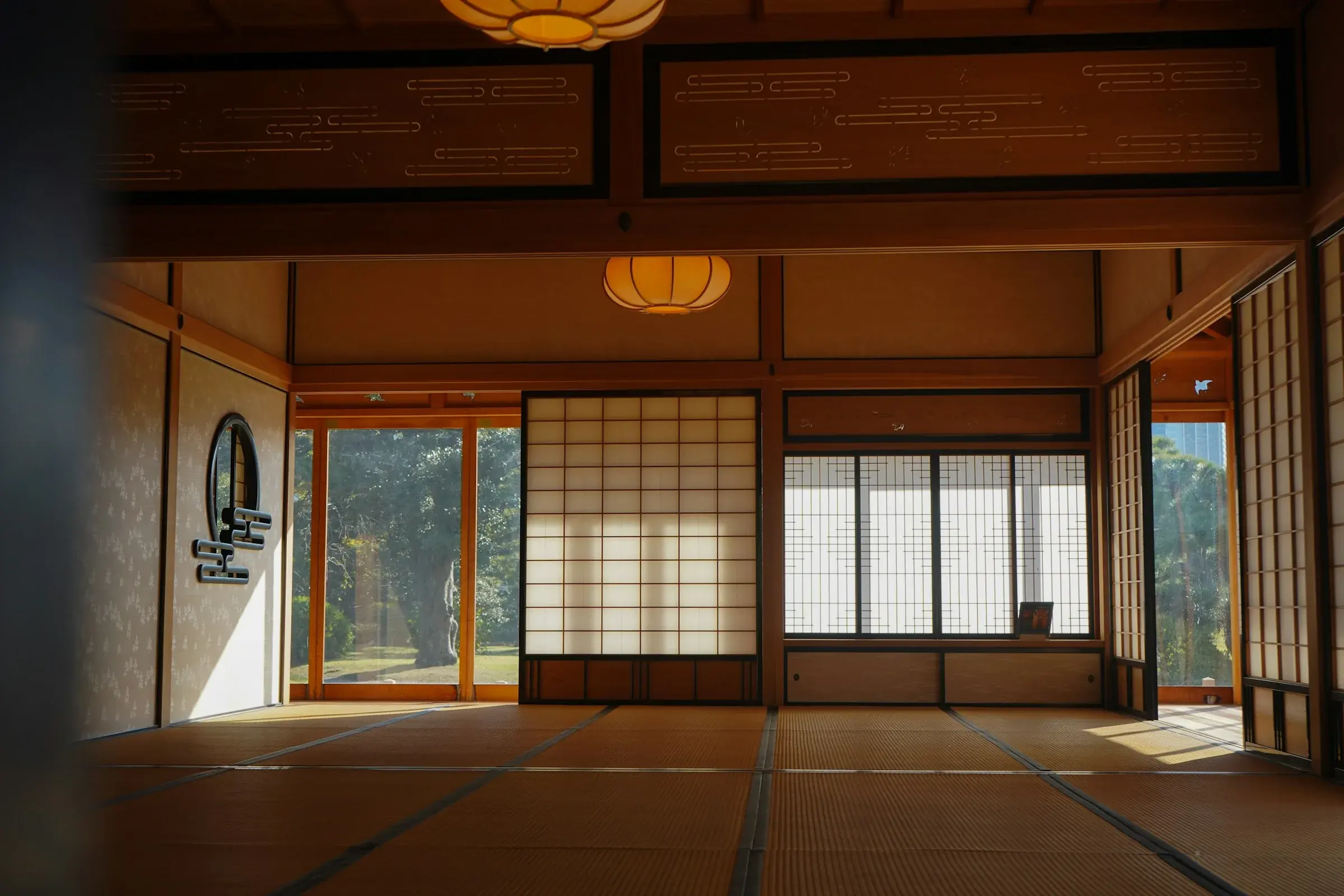
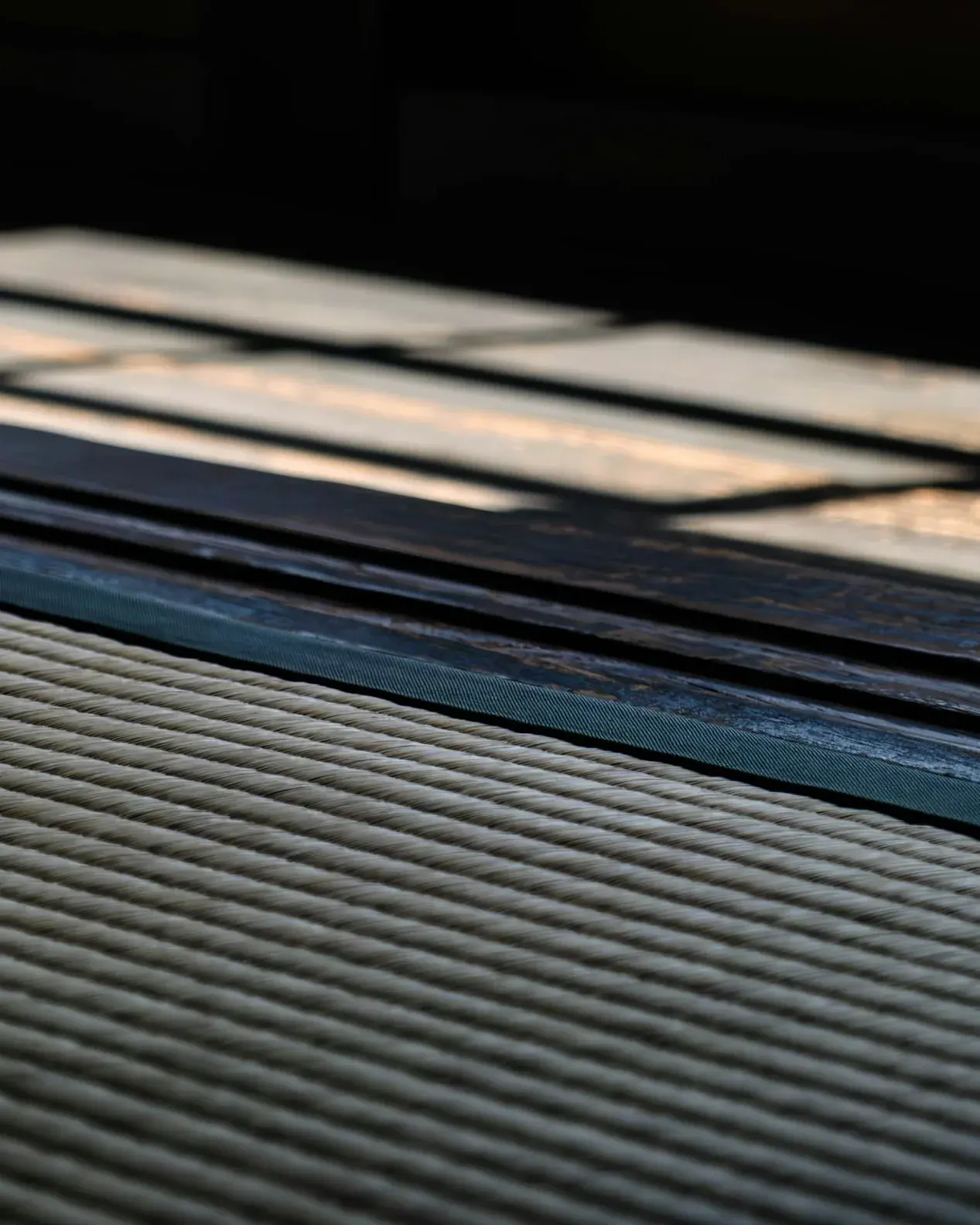
A floor of woven rush, edged in cloth.
Tatami are the mats that make the floor of a traditional Japanese room — laid edge to edge, so closely that the room is measured in them: a six-mat room, an eight-mat room. The dark lines you see running across the floor are their edges.
- Tatami畳
- A mat of woven igusa rush over a thick core, roughly 90 by 180 centimetres. Soft underfoot, it smells of cut grass when new and turns from green to gold as it ages.
- Tatami-beri畳縁
- The band of woven cloth sewn along the two long sides of each mat. It protects the rush and draws the lines of the room — often plain in a house, brocade with crests and gold thread in a temple hall.
- The bags
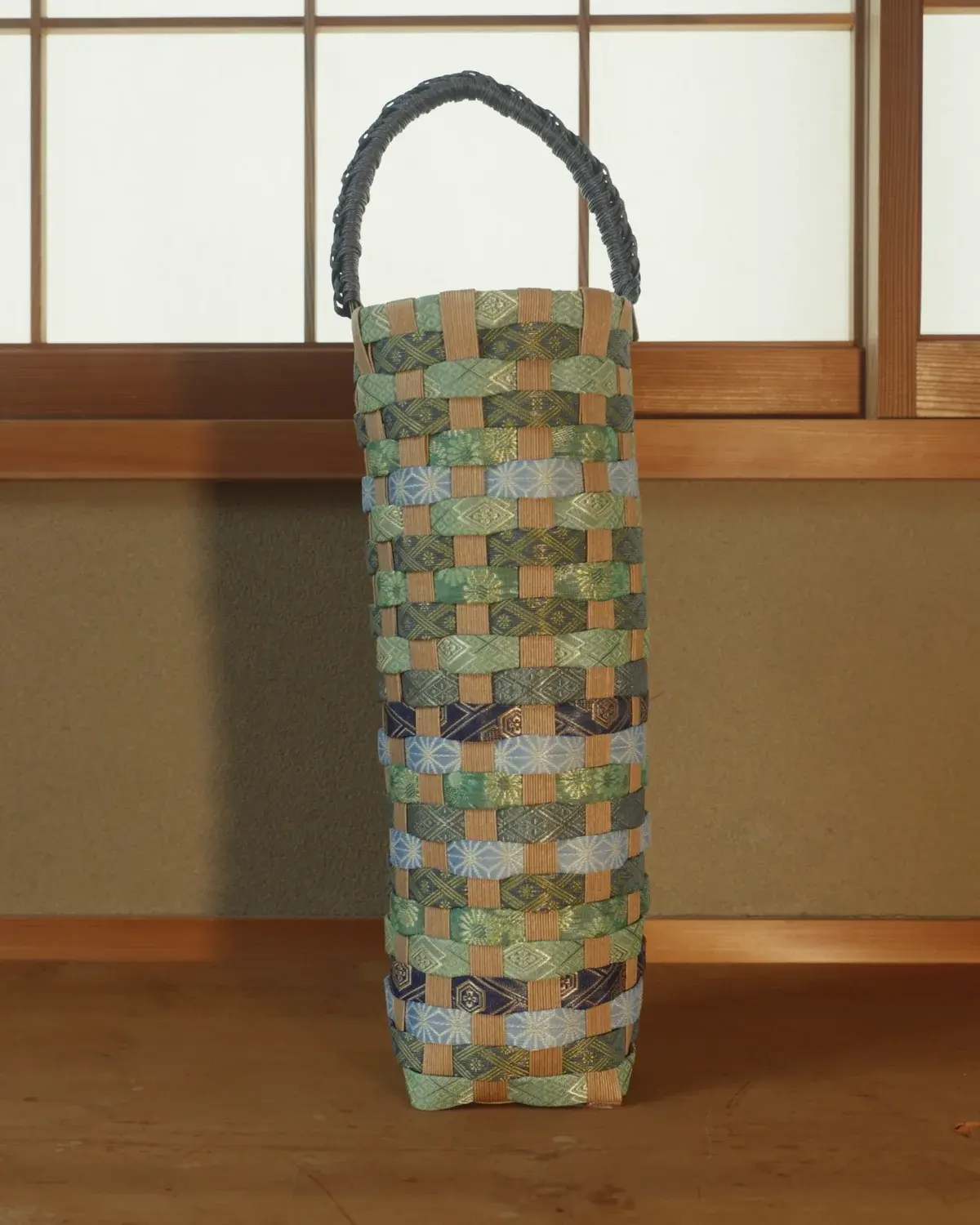
Every time a room is laid, the tatami maker is left with offcuts of edging too short to use. Those remnants are what MIROKU is made from — woven onto paper band recycled in Fuji City.
The character 縁 is also read en: a meeting.
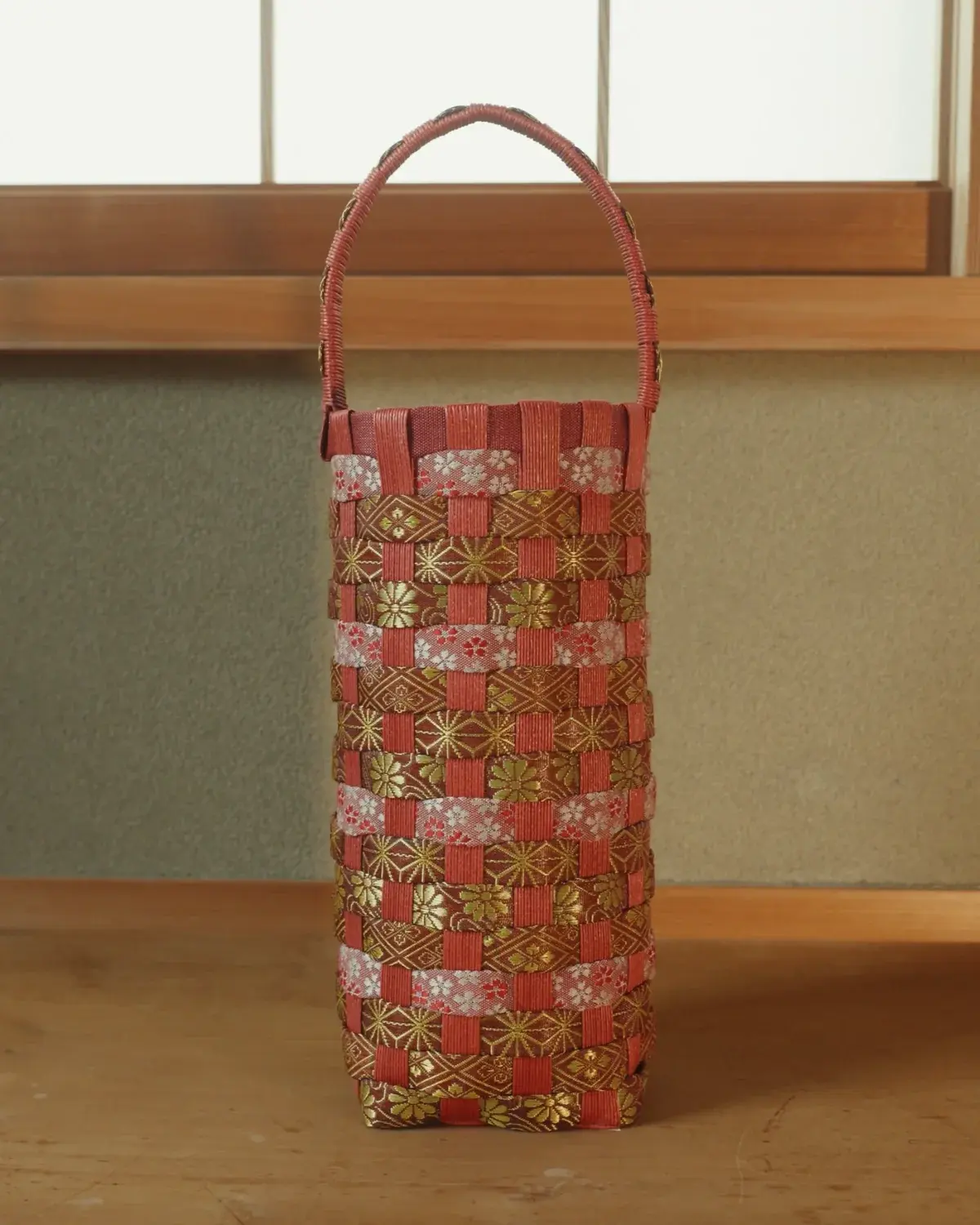
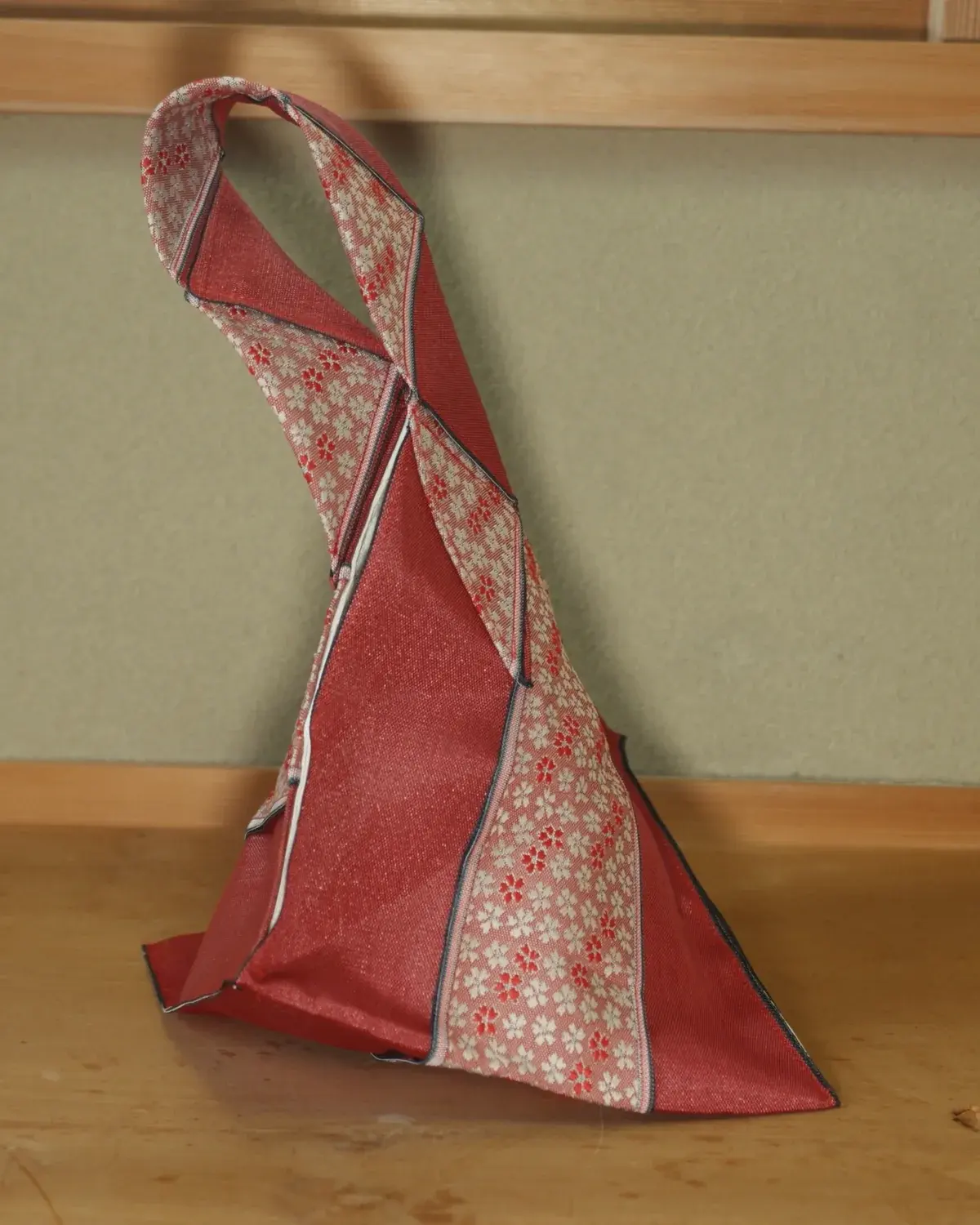
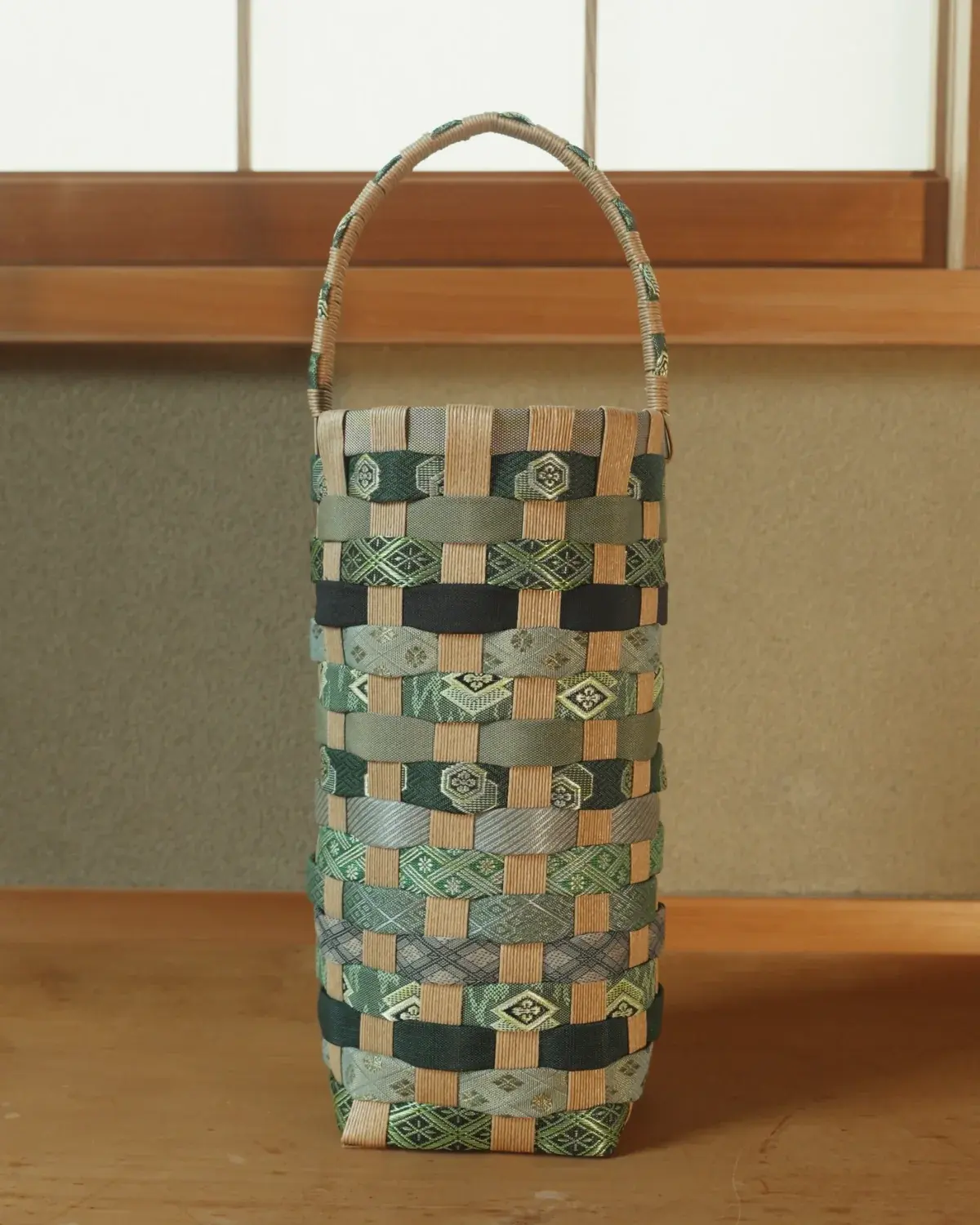
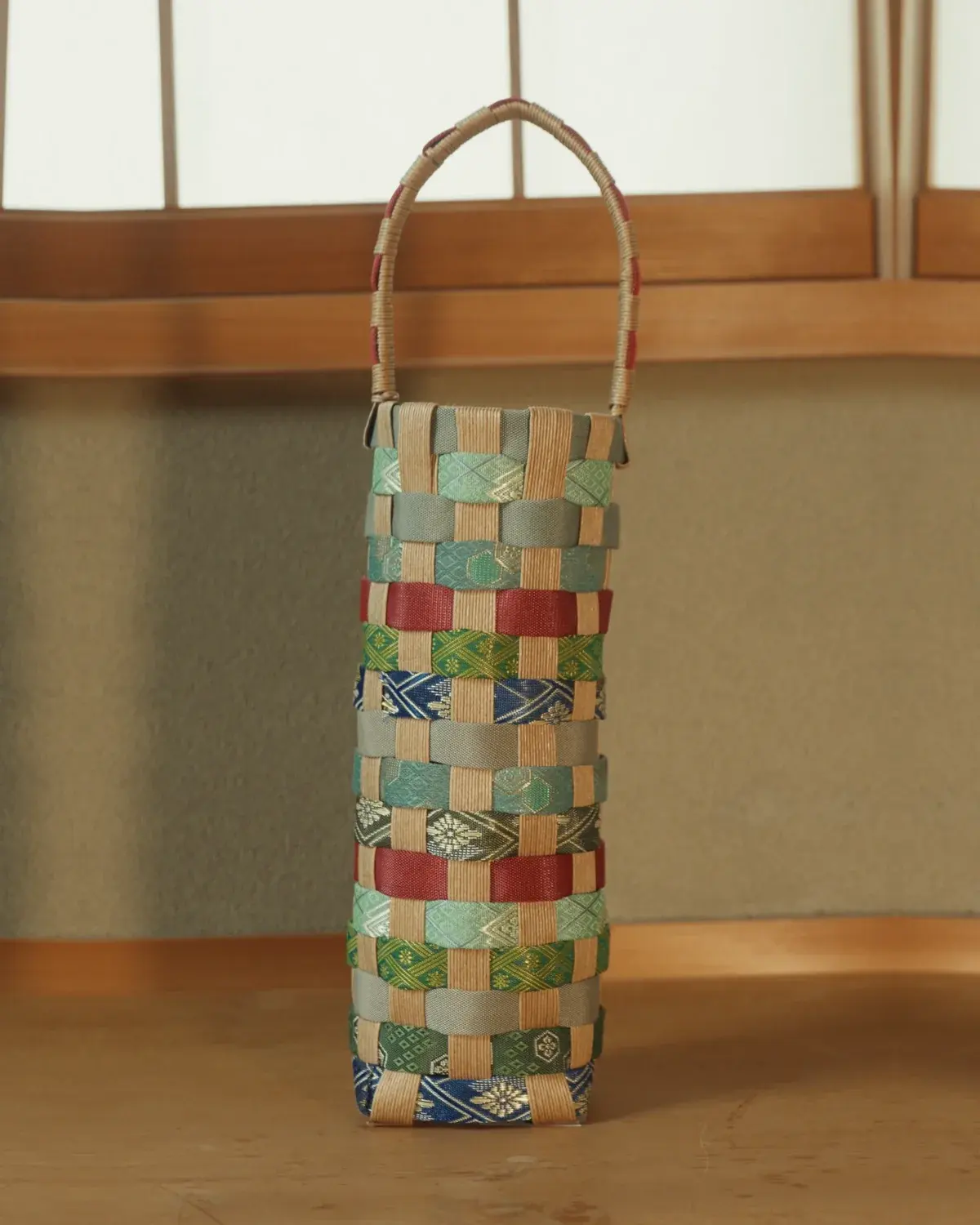
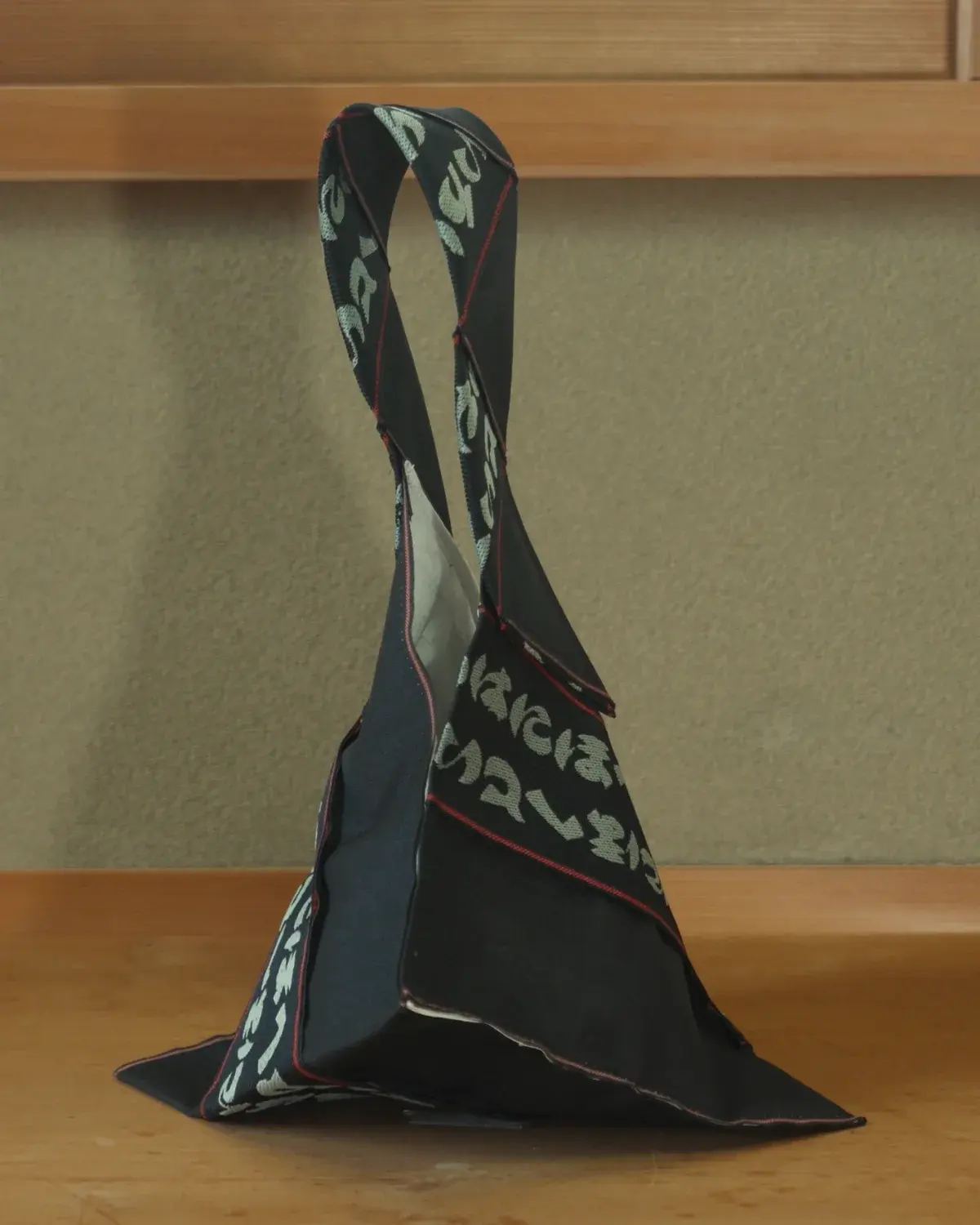
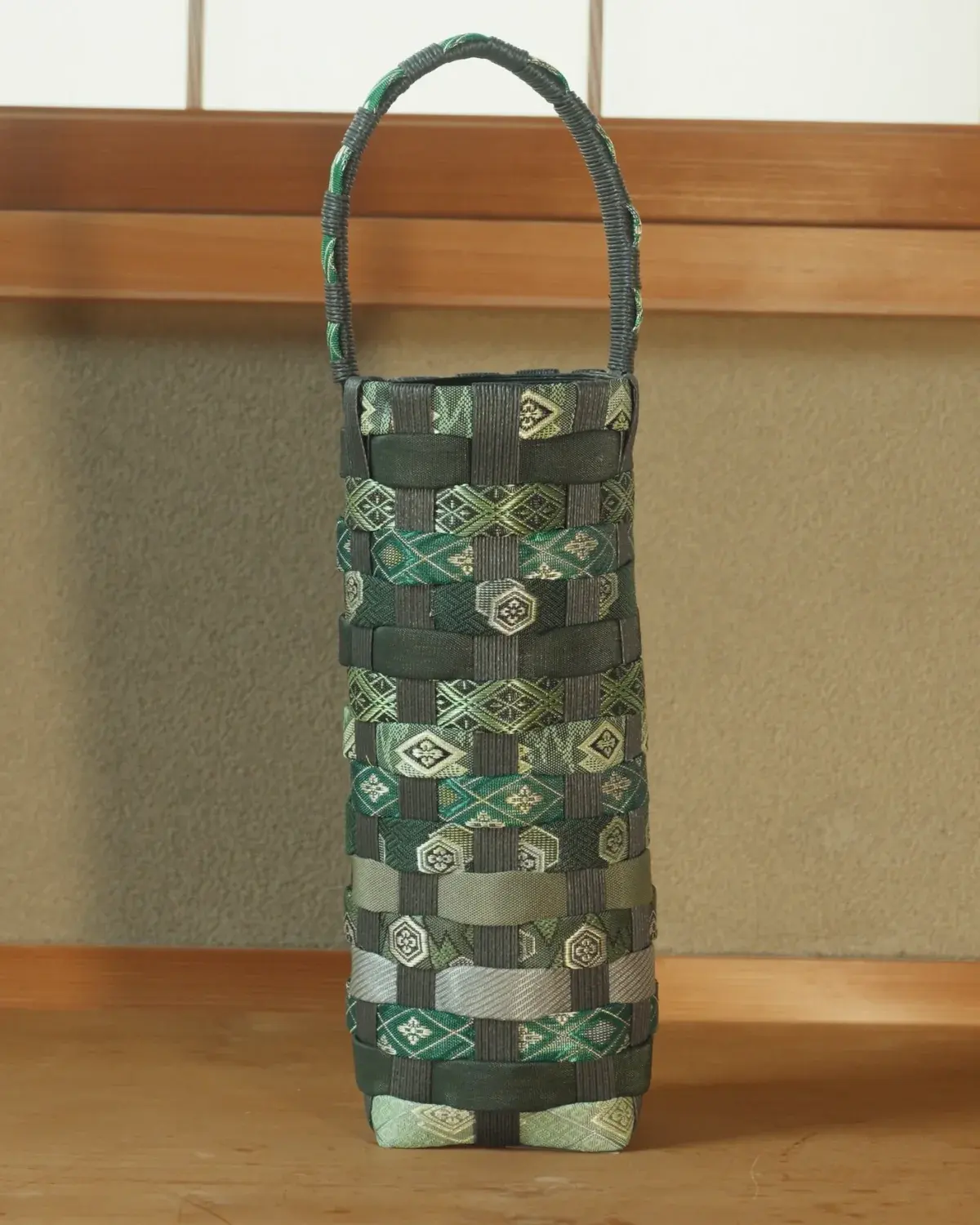
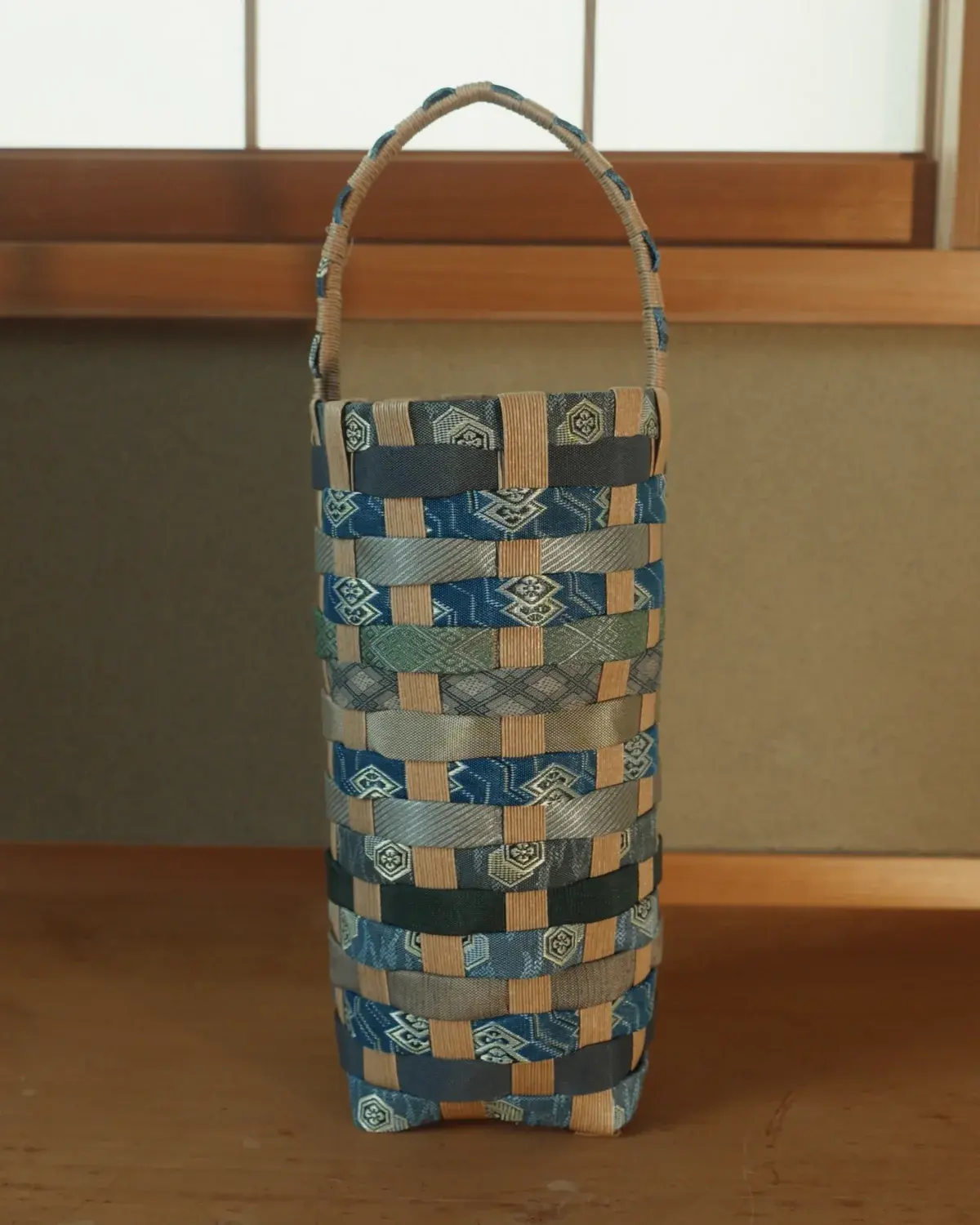
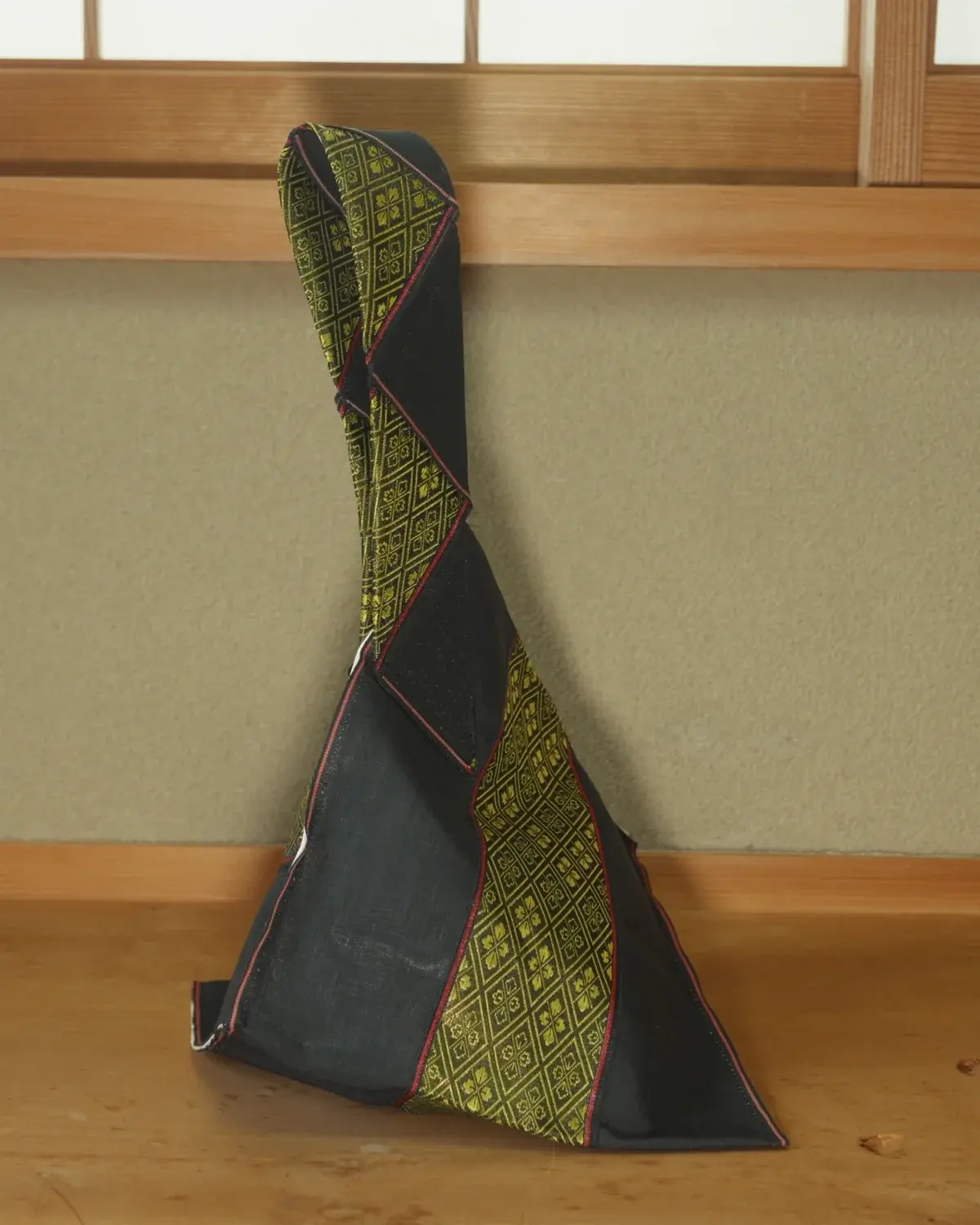
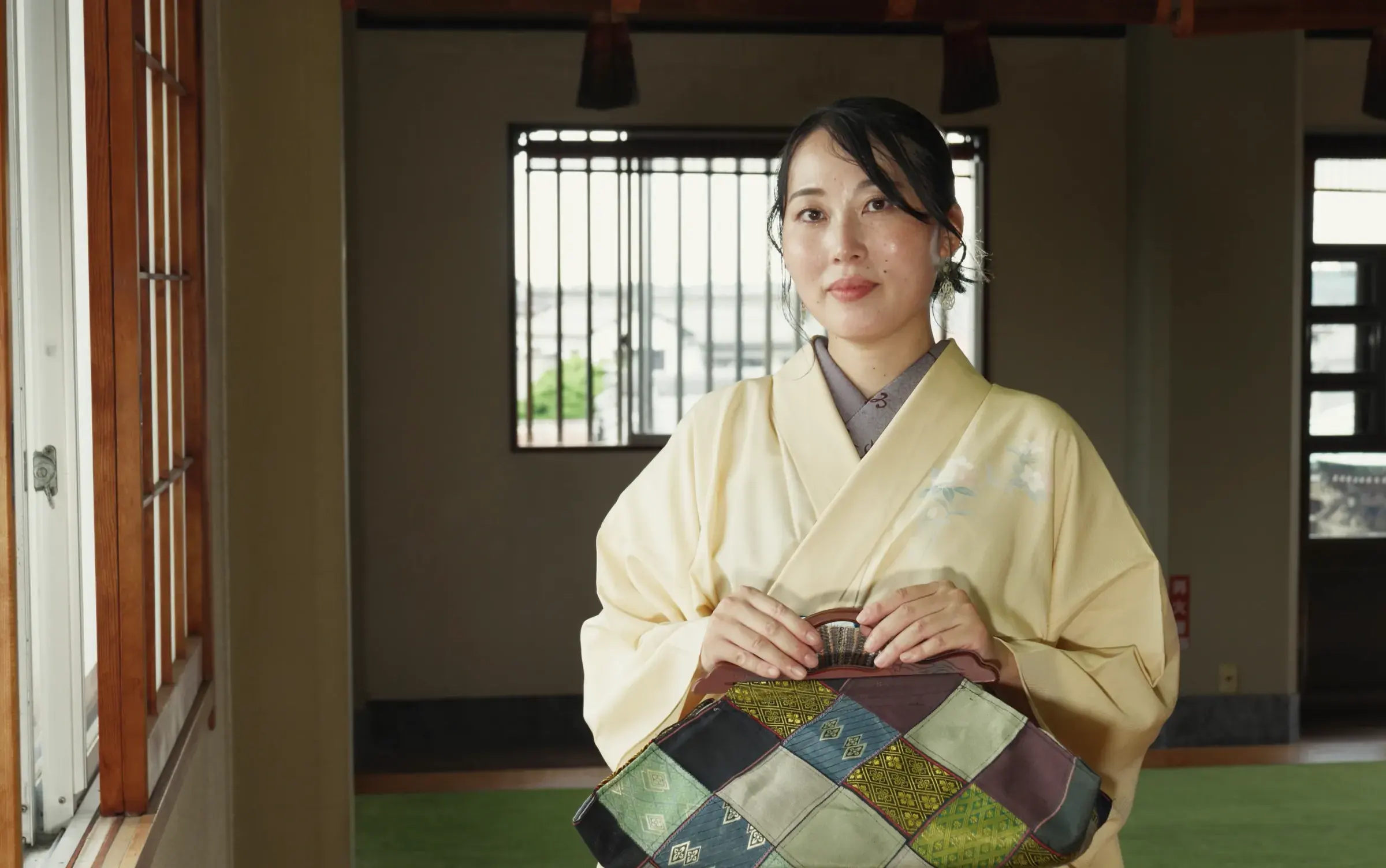
Made to be carried, and made to go with kimono.
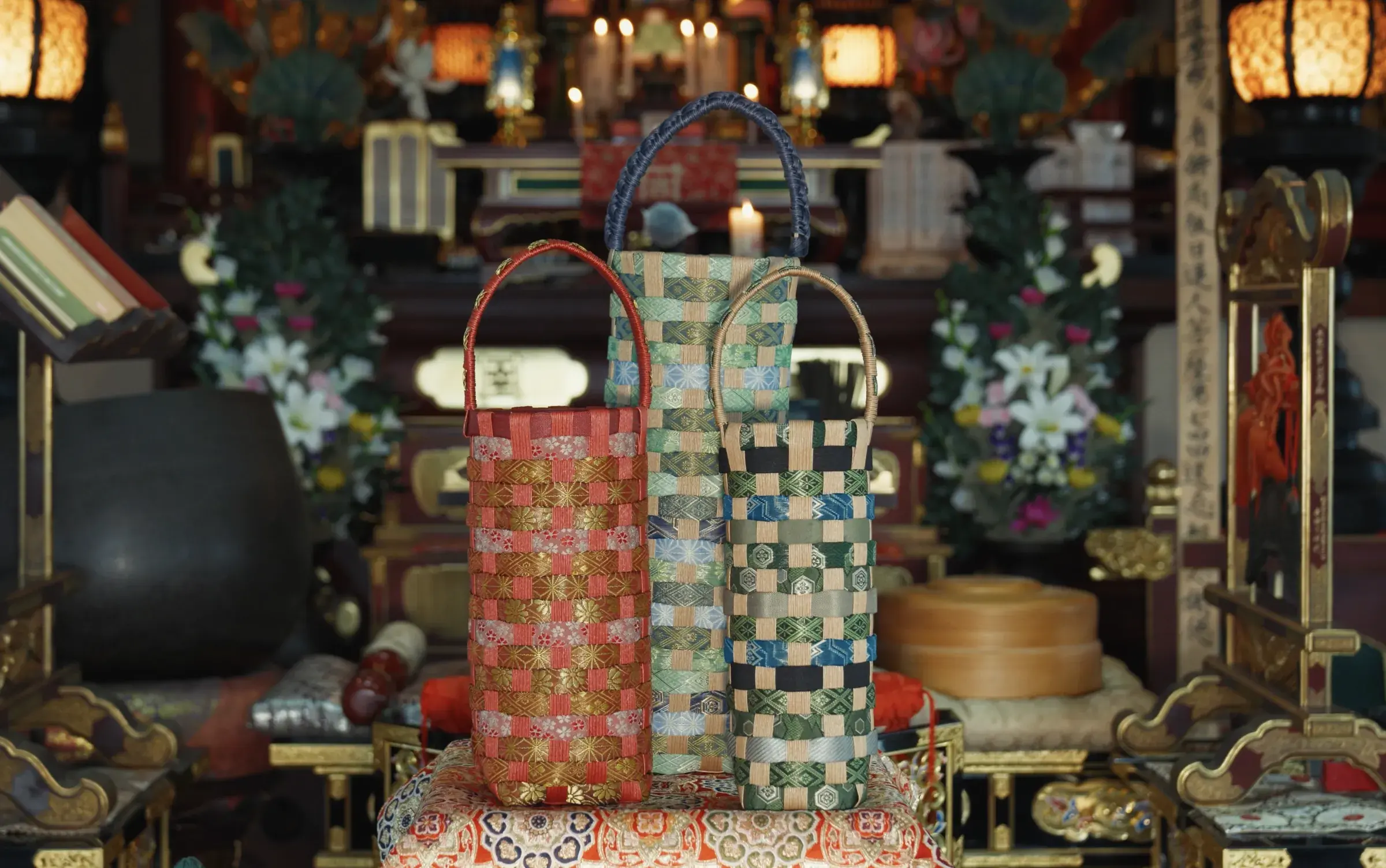
Every photograph of the bags was taken at Honmyoji — the hall, the windows, the wooden floor they were made on. None was shot in a studio.
The collection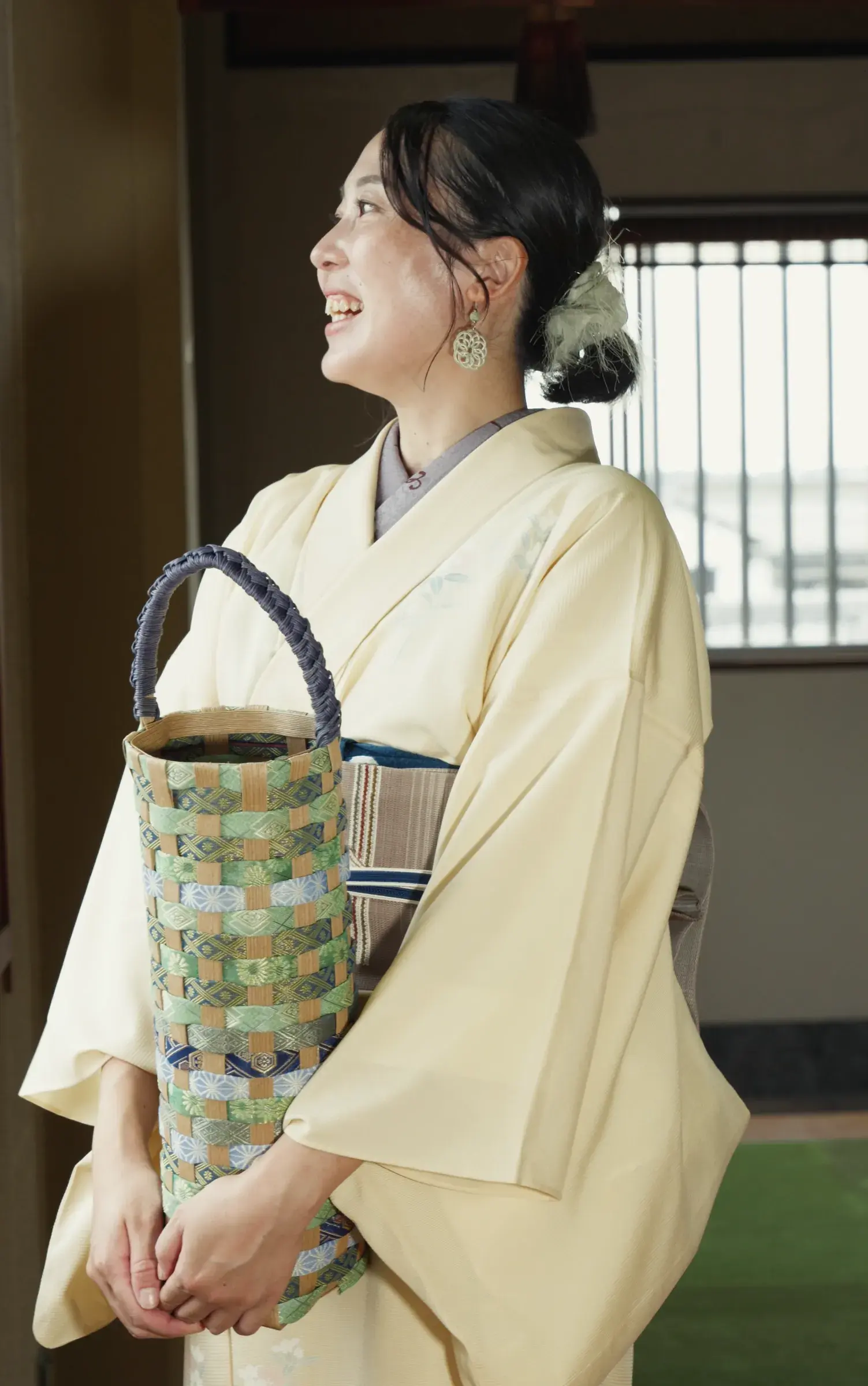
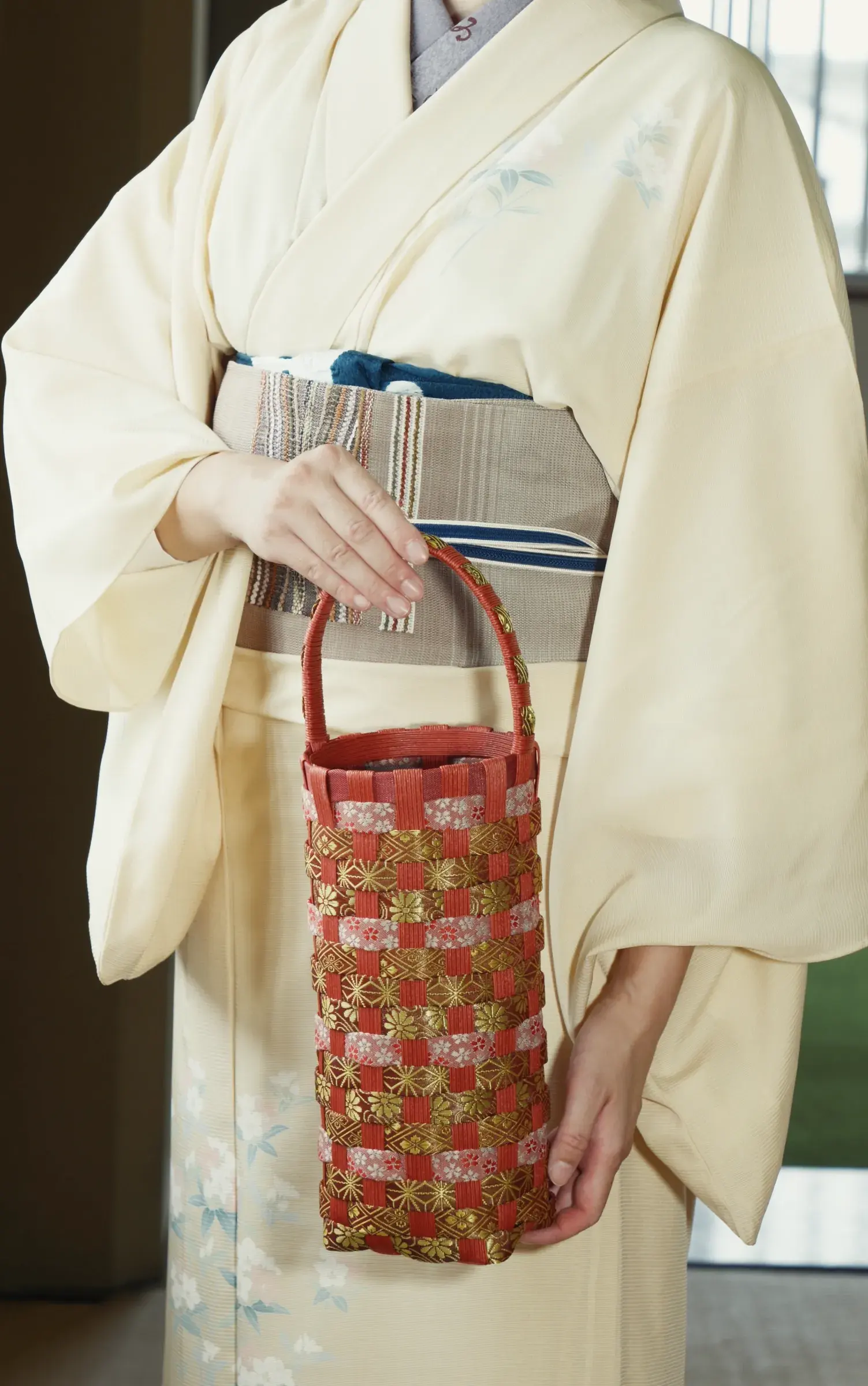
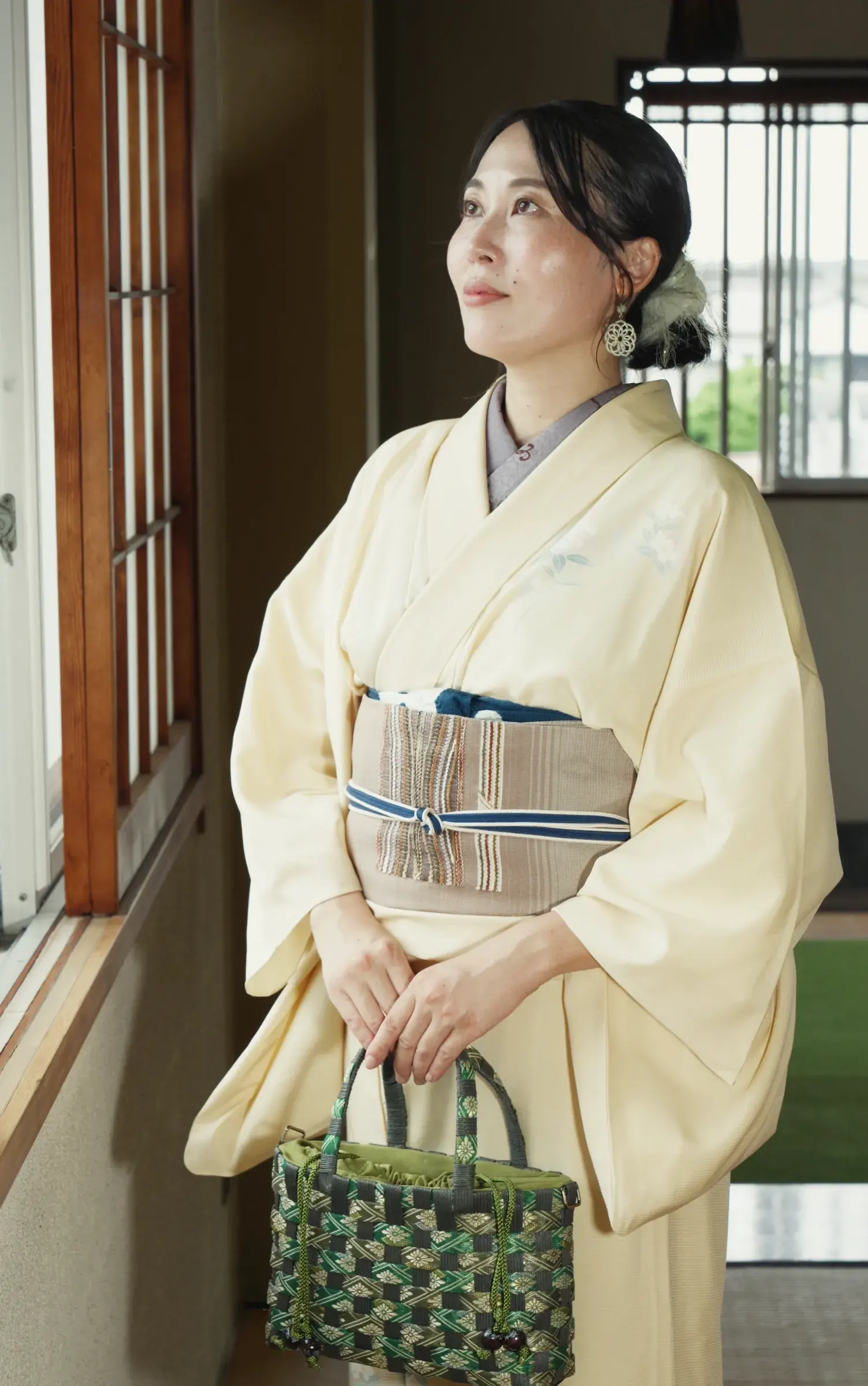
Five kinds of work
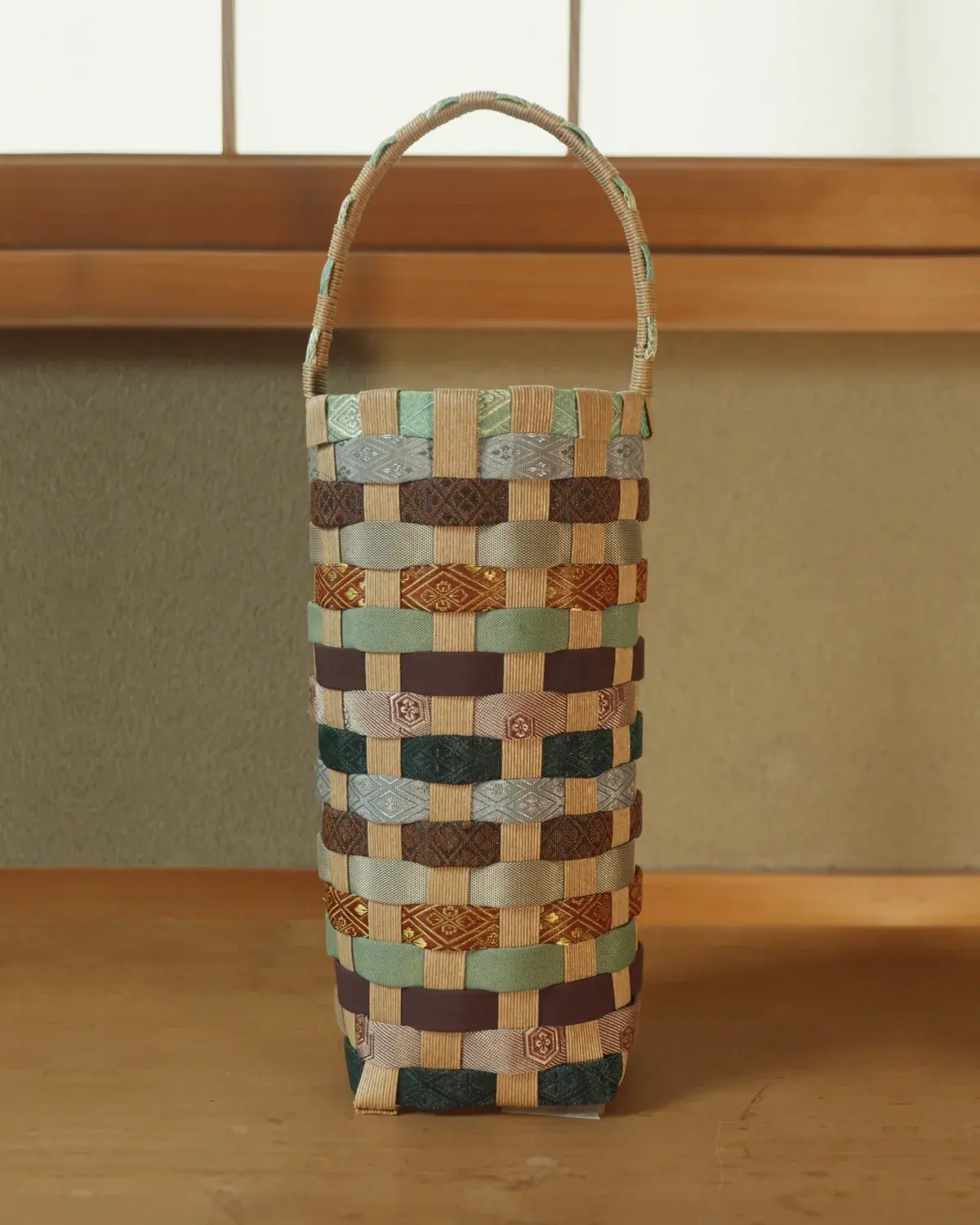
 Bottle bagsTatami-beri woven over paper band recycled in Fuji City. Three heights — small, medium and large — each made to carry a bottle.
 Origami bagsWide bands of tatami-beri folded from one flat piece into a bag that stands on its point.
 HandbagsTatami-beri pieced into diamonds under a carved handle, or woven over and under like a basket.
 Shoulder bagsVintage kimono cloth, cut and pieced into a crescent on a long strap.
 ApronsAprons with a panel and pocket of vintage kimono cloth.
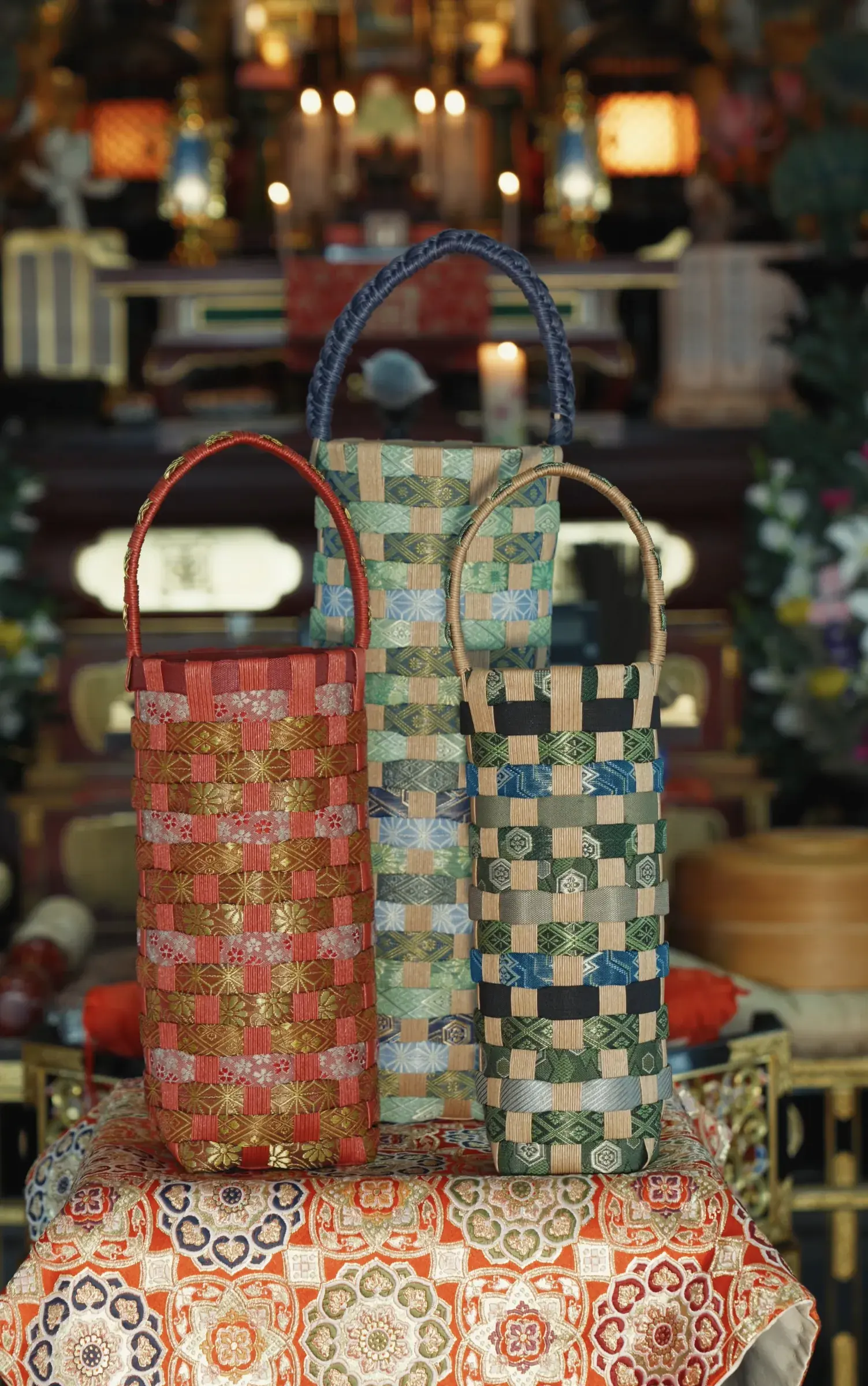
Set before the altar, then sent.
Every bag is made entirely by hand in Japan, one at a time. Just as each strip of tatami-beri reaches us through some chance connection, every finished bag comes out with a character of its own — the colour, the pattern, the shape all a little different, in ways no machine could repeat. Because it is handmade it keeps that warmth, and becomes a bag you will meet only once.
Every finished piece is set down in the main hall before it leaves. After that, it belongs to the person who found it.
Notes
The blogtest
test
Welcome — MIROKU is open
Our site is live. A quiet place to meet one-of-a-kind tatami-beri bags made at Honmyoji Temple in Fuji City, Japan.
Handmade Tatami-beri Bags from Honmyoji Temple
One-of-a-kind bags handwoven in Fuji City, Japan, from tatami-beri remnants and recycled paper band. Browse the MIROKU collection.